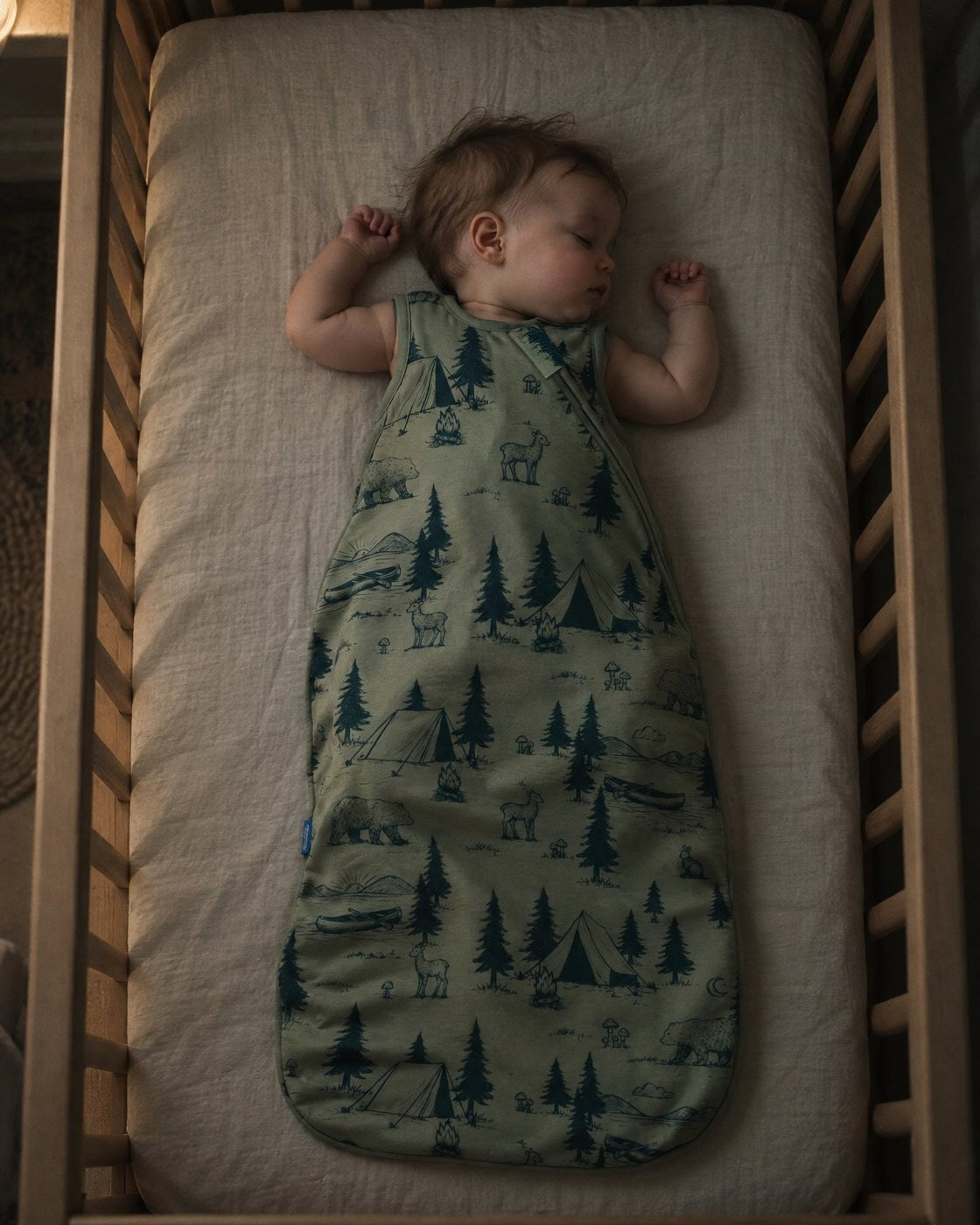
Sleeping in wool promoted faster sleep onset compared to cotton, in a laboratory study of 17 young adults at 63°F.
Dream Merino™ from sleeves to ankles
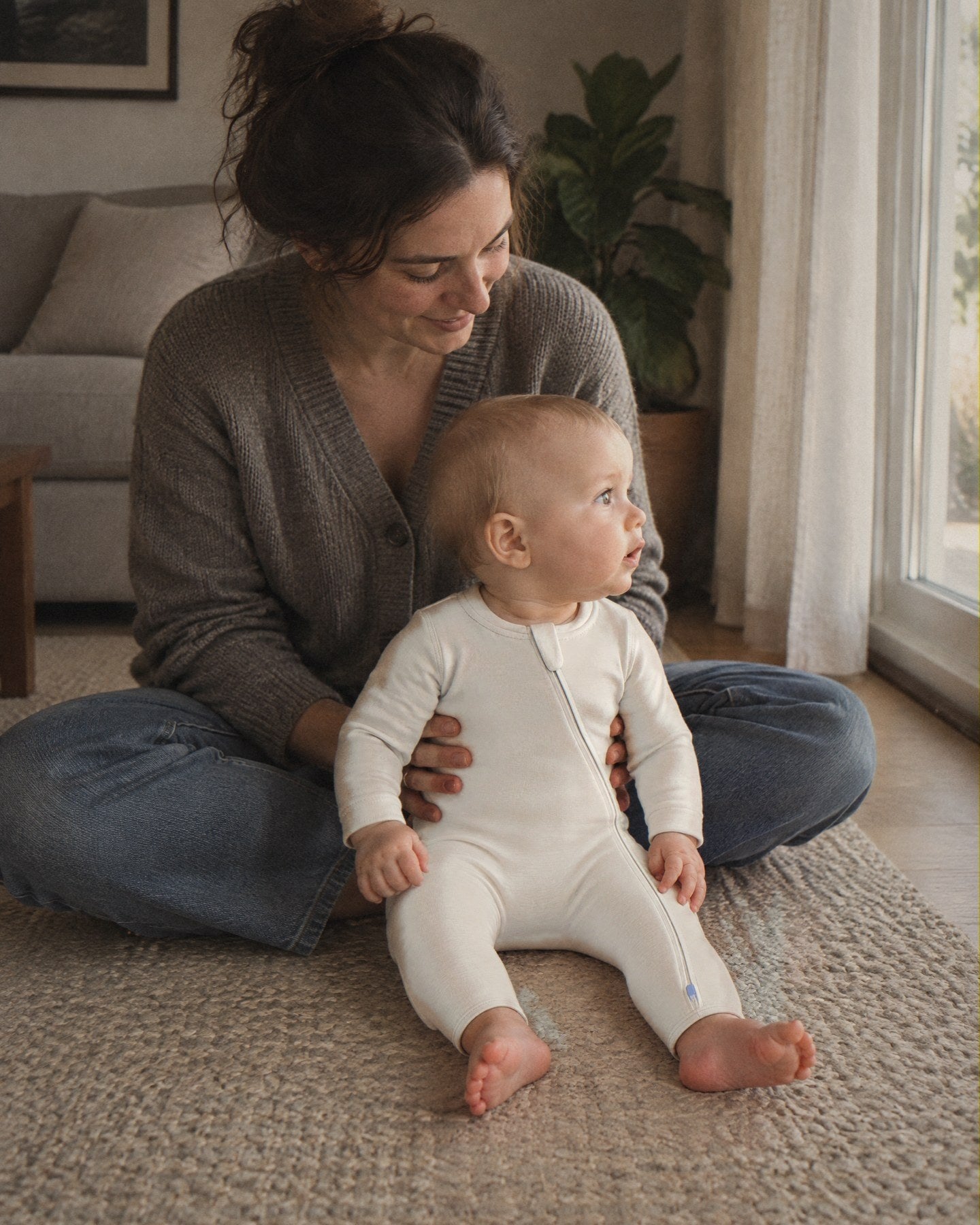
Merino Onesie
Footless Australian merino one-piece for breathable day-to-night comfort.
- Two-way zip for easy changes
- Fold-over mittens in every size
Buttersoft superfine merino regulates temperature while feet stay free. A two-way zip runs from the center of the neck diagonally down the left leg to the ankle, and fold-over mittens are built into every size.
- Free shipping on orders $100+
- 30-day returns, free size exchanges
- Standard shippingFREE
- 30-day returns, free size exchanges
A note from AliCo-Founder & Product Designer
“A one-piece needs to handle nighttime changes and active daytime wriggling. I designed this footless onesie with a bottom-opening zip so you never expose baby’s chest, built-in mittens for cool nights, and reinforced crotch seams that will not split.”
Ali Hui
Why choose this footless onesie?
It offers full body coverage while leaving little feet free for socks, bare-foot play, or slippers. Perfect for daytime wear or as a cozy layer under sleep sacks.
How do I choose a size?
Sized by age: 0–3 months, 3–6 months, and 6–9 months. The stretchy knit allows natural movement. If between sizes, size up for growing room.
- Length (shoulder to ankle): 22 in56 cm23½ in60 cm25½ in64.5 cm
- Shoulder: 7 in18 cm7½ in19 cm7¾ in20 cm
- Chest: 8¾ in22 cm9½ in24 cm10¼ in26 cm
- Hip: 9¾ in25 cm10¾ in27 cm11½ in29 cm
- Leg length: 7¾ in20 cm8¾ in22 cm9½ in24 cm
- Arm length: 8¼ in21 cm9 in23 cm9¾ in25 cm
Footless style: ankles are left open.
Measured flat. Allow about ½ in (1 cm) either way.
How does the two-way zip help with changes?
One two-way zip runs from the center of the neck diagonally down the left leg to the ankle. Unzip from the ankle end for a diaper change, or from the neck when you are dressing them. A soft guard sits flat over the top of the zip so it does not rub their chin.
Can I layer this under a sleep sack?
Yes. On cooler nights, it makes an ideal base layer under our sleep sacks. See our sleep sack page for a helpful nursery temperature layering chart.
How do I wash it, and will it shrink?
Wash it once before first wear to rinse out loose fibers. Then machine wash on a gentle wool cycle with liquid wool detergent. Dry it over a rack in the shade, out of direct sun, because sunlight can discolor merino. Do not tumble dry, soak, or bleach. Our superwash merino resists shrinking on gentle cycles.
Thousands of parents love merino
The zip down the left leg makes changes so easy. No fiddling with a row of snaps while she's wriggling.1.2K
I was worried wool would feel scratchy. This is softer than most of our cotton pieces.847
It's lovely and soft, and roomy enough that she can kick and crawl freely. It looks just as good after lots of washes.2.3K
Everyone pushed bamboo on me at my baby shower. Honestly, merino is in a different league.596
I wash it way less than I expected. Merino just doesn't hold onto smells the way cotton does.1.8K
My favorite thing she owns. It's warm enough on its own around the house, and it layers easily when we head out.412
Bamboo shrank on me twice. This came out of the wash exactly the same size.3.1K
I was nervous about wool on a newborn, and it turned out softer than most of our cotton pieces.729
I didn't get the hype about merino until we tried it. It's soft, it breathes, and it doesn't smell even after a full day.1.5K

One simple piece, feet left free
Daytime crawling or nighttime sleep, babies need breathable coverage that adapts. Superfine Australian merino keeps skin comfortably dry, while open cuffs leave feet free. A two-way zip down the left leg makes diaper changes fast, with a soft neckline that never chafes.
The sheep tried telling us all along
The same fleece that carries sheep through hot days and cold nights now protects your baby’s skin.
Materials, from fiber to fabric
- Woolmark® certified merinoMeets standards for fiber content, performance, color fastness, and dimensional stability.
- OEKO-TEX® STANDARD 100The textile has been tested for harmful substances.
How does merino work?
Nature’s temperature buffer.
Holds warmth, breathes out heat
Merino wool fibers feature a natural microscopic crimp that holds pockets of air. When the room cools down, these air pockets insulate. When the room warms up, the weave breathes freely, preventing the heat buildup common in synthetic fabrics.
Moves sweat before it turns cold.
The 2 AM solution
Unlike cotton or bamboo viscose that hold wet liquid against the skin, merino absorbs perspiration while it is still vapor and releases it into the air. Your baby’s skin stays comfortably dry, preventing the cold clamminess that triggers 2 AM resettles.
Fresher between washes.
Naturally odor-resistant
Merino wool fibers naturally trap odor molecules inside the fiber structure, locking them away until washing. Your baby’s onesie stays fresher between laundry cycles.
What research reveals about wool sleepwear and skin
Independent studies on superfine wool explain why we build sleepwear around merino.
A 12-week crossover trial of 39 children aged 4 weeks to 3 years, comparing superfine merino clothing with standard cotton.
Sportswear trials examining next-to-skin microclimates during temperature shifts.
These studies evaluated wool clothing and textiles generally, not this specific onesie. They explain why we choose merino; they do not show this product treats eczema or helps babies sleep longer.
The truth about baby sleep fabrics
Not all soft fabrics breathe. Here is how natural merino compares to rayon viscose and polyester next to baby skin.
| Fiber property | Our choiceMerino | Bamboo viscose | Polyester fleece |
|---|---|---|---|
| Moisture management | Vents moisture vapor | Holds wet liquid | Traps sweat |
| Temperature shifts | Natural crimp insulates | Cold when wet | Prone to overheating |
| Fabric processing | Naturally grown fiber | Chemical solvent bath | Petroleum plastic synthesis |
| Softness next to skin | Superfine, not scratchy | Smooth and soft | Depends on finish |
In textiles, “bamboo” means rayon viscose made by chemically dissolving plant pulp.
Thoughtful details for day and night
Nurse-designed construction for active movement and easy changes.
Frequently asked questions
How does this differ from the Footed Onesie?
This onesie has open ankle cuffs to keep feet free, sized 0–9 months. The Footed Onesie has built-in feet with a double layer of merino, sized newborn–6 months.
Will the zipper rub my baby’s neck or chin?
No. A soft guard sits flat over the top of the zip at the neck, so the zip never rubs their chin or neck.
Will the seams hold up to active kicking?
Yes. The crotch seam is overlocked then cover-stitched. This double-reinforced construction prevents the tension runs and seam splits common in everyday babywear.
Will this wool itch or scratch?
No. We use superfine 19.5 micron Australian merino. The fibers are microscopically fine and flexible, bending softly against infant skin without prickling.
Why choose merino over bamboo?
The FTC states soft “bamboo” is rayon made with harsh chemicals. Rayon viscose holds wet sweat in the fabric; merino moves moisture away as vapor, keeping skin dry.
How do I wash it, and does it pill?
Machine wash on a gentle wool cycle with liquid wool detergent, and dry it over a rack in the shade, never in direct sun. A little pilling is normal, and a battery lint shaver takes it off easily.
Better comfort starts with what touches their skin.
- Designed by former nurse Ali Hui20+ years making baby merino with a focus on skin comfort.
- Woolmark® certified merinoMeets standards for fiber content, performance, color fastness, and dimensional stability.
- OEKO-TEX® tested fabricThe textile has been tested for harmful substances.
Leave your email and we’ll let you know when it’s back.